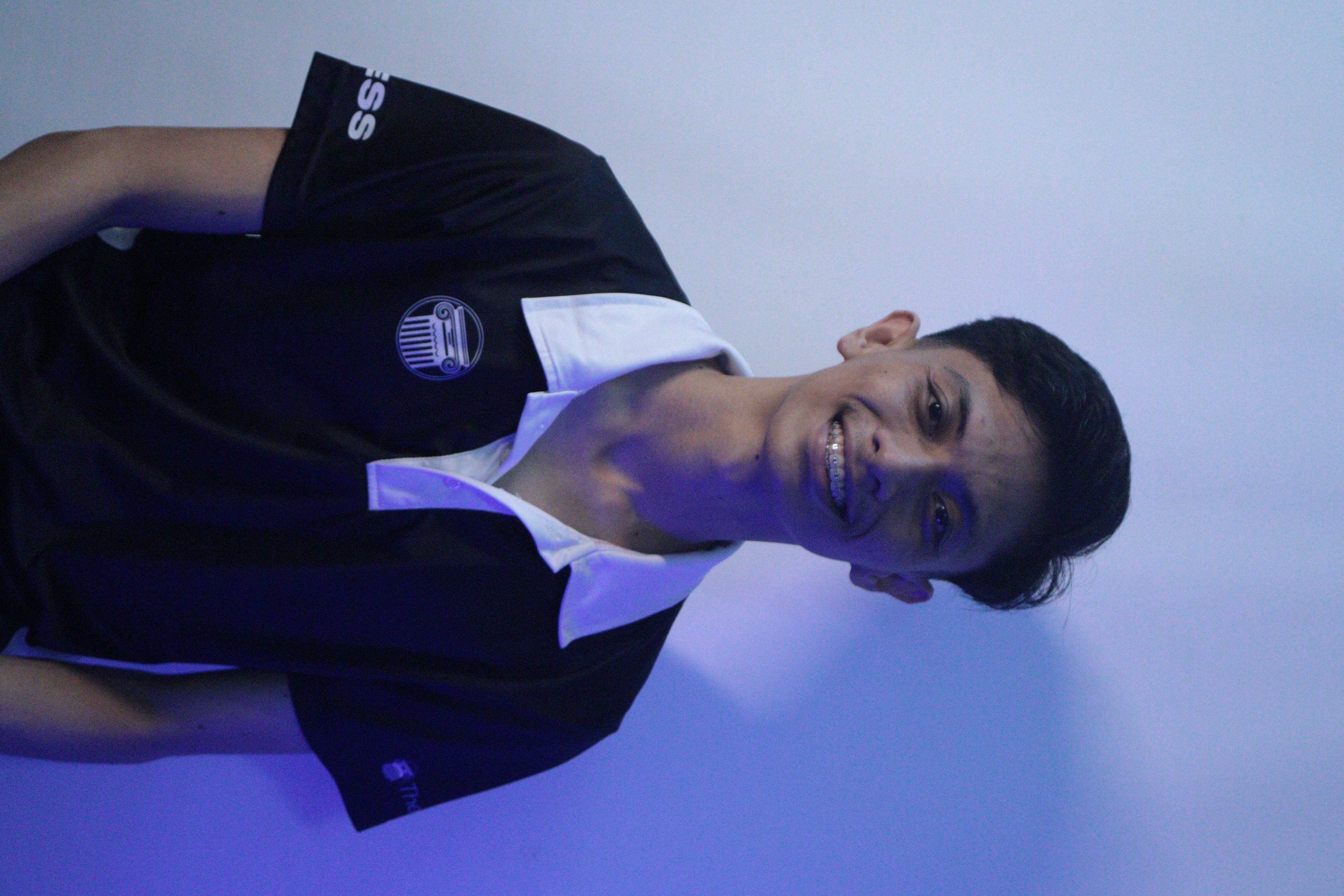
THE COUNCIL OF ORGANIZATIONS IN ATENEO-NAGA (COA-N) filled all nine positions of its Executive Board during its first official meeting and elections on 7 July, bringing together representatives from recognized student organizations across Ateneo de Naga University. Before ballots were cast and officers proclaimed, the gathering asked participants to return to a simpler question: Why do student organizations exist in the first place?
That question anchored the keynote session, “In All Things: Our Story, Our Identity, Our Mission,” delivered by Lideratos’ Moderator Cristine Refuerzo. She emphasized that organizations are communities of formation, where shared experiences shape both identity and leadership. While each group carries its own advocacy, Refuerzo encouraged organizations to look beyond individual pursuits and recognize the value of working together to address common challenges facing the student body. In that spirit, COA-N serves not as a venue for competition, but as a space for collaboration—one that would soon be reflected in the election of its new leaders.
As representatives cast their votes, the council elected its new Executive Board: Leticia Bance as Chairperson, Luiselle Hernandez as Vice-Chairperson, Andrea Escorel as Executive Secretary, Grant Dela Cruz as Finance and Aid Officer, John Deo Esmabe as Creatives and Information Officer, Guia Duran as Recruitment and Convention Officer, Nina Mendoza as Community and Relations Officer, Kerwin Ardinazo as Training and Formation Officer, and Charmelle Badiola as Research and Development Officer.
Their oath, administered by outgoing Vice Chairperson Aila Mae Velan, was more than ceremony, but a mark of the moment when the day's conversations about shared purpose gave way to a question only the coming year can answer: How will that vision take shape in the work ahead?
Yet, the fullness of the COA-N Executive Board casts a longer shadow toward the Liderato kan Nueva Atenista, where, among its executive positions, only the President presently stands. Most consequentially, the vacancy of the Internal Vice President leaves COA-N without its designated Ambassador to the Lideratos, weakening a formal link between a newly completed council and a central student government already marked by dusty vacant posts. Newly elected COA-N Chairperson Leticia Bance still enters the Student Congress as an ex officio member, but one occupied seat cannot make an incomplete structure whole; it is still hollow. The arrangement does not erase that absence, but it gives Bance’s mandate particular weight, for she now stands at a crucial meeting point between organizations that have completed their leadership and a central government still confronting the spaces left unfilled.
This absence becomes heavier against a student body already difficult to summon.
Student apathy has endured despite efforts to reach Atenista through smaller, nearer worlds of their respective mother organizations. Yet membership does not always become involvement, and connection does not always become conviction. If even these bridges struggle to carry students toward participation, then a central government reduced to a lone elected President risks widening the very distance it must close; representation may become an exhausting practice of finding whoever is available rather than holding whoever is responsible.
With COA-N filling its house, the challenge is whether that fullness can travel beyond its own seats, towards students who have grown distant, institutions struggling to reach them, and a central government whose vacancies cannot be allowed to become permanent furniture. A university may gather every organization beneath one roof and call it community, but until representation can reach those who no longer enter the room, a full house can still stand beneath empty seats.