
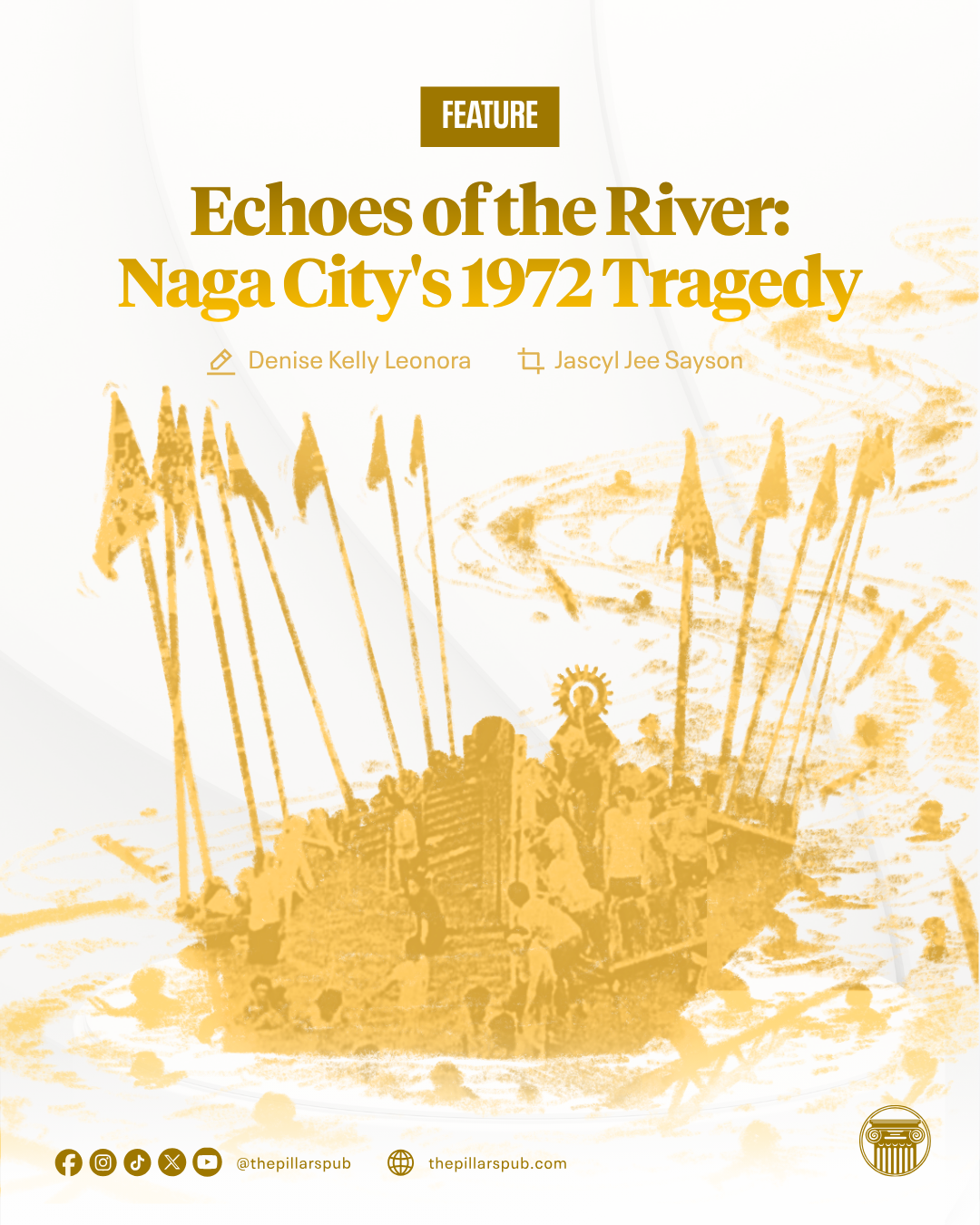
In 16 September 1972, the Naga River was very much filled with life. Along its banks, thousands of devotees and spectators gathered to witness the Peñafrancia Fluvial Procession, one of the Naga City's most cherished religious traditions. Colorful boats crowded the water as devotees accompanied the pagoda carrying the images of El Divino Rostro and Our Lady of Peñafrancia toward the Basilica Minore.
For many, it was a moment of faith and celebration—a tradition that brought families and communities closer each year.
On the Bailey-type wooden bridge of Colgante, a 15-year-old structure, large crowds formed to witness such historical event. From Above, spectators could watch the boats pass along the river and catch a glimpse of the sacred image, hench the excitement growing. But beneath noise and anticipation, was a danger that many could not foresee.
That afternoon, the celebration fell silent.
The bridge suddenly collapsed under the weight of the crowd, plunging spectators into the river below. In seconds, prayers and cheers gave way to cries for help. People who had come to witness a religious procession were suddenly fighting for their lives, while others searched desperately for relatives and friends amid the panic.
Nearly a hundred people died and many others were injured. Behind this death toll were families who returned home incomplete; parents who lost their children; children who lost their parents; friends and relatives searched for people who, only moments earlier, had stood beside them waiting for Ina to pass.
Devotion was replaced by mourning.
However, it is very much prevalent, reinforced by our very religion, that there shall be suffering before salvation. With this knocks an overdue question that lasted for more than five decades: Have our standards sunken beneath the soil that death tolls have become the metric of the quality of safety we deserve?
More than a hundred lives had to fall with the bridge before its failure could become our lesson. What was once a structure people trusted enough, became, within seconds, evidence of what that trust had cost them. And while faith brought thousands to the river that afternoon, faith could not hold the bridge beneath their soles.
For the people of Naga City, the tragedy became more than an unfortunate event in the history of the Peñafrancia Festival. It became a memory carried by generations; a painful chapter intertwined with a celebration that should have been remembered through faith, devotion, and homecoming.
Perhaps we ask why people, then, stood on a bailey bridge? The obvious answer would be their faith, which also gives people uncountable amount of bravery and strength; they wanted to see Ina. This very devotion is visible within Naga City, being carried by thousands of pilgrims from across the Philippines. However, to place the burden on the crowd for gather would be to mistake devotion for negligence. Why was a bridge carrying that many lives allowed to become the weakest part of a celebration expected to carry thousands?
You may say questioning this now is pointless, as it can no longer bring back those who drowned decades ago. However, tragedies should not merely be mourned—they must also be understood. The collapse demonstrated how quickly a familiar place can become dangerous when the condition of public infrastructure and the volume of people using it are not properly considered. Colgante demands the examination of what failed even before its collapse, and what changed after more than a hundred deaths were recorded. Are those changes made because the government finally realized that above everything else, people deserve utmost safety, or is it due to the lives lost that is now impossible to overlook?
Over the years, crowd control and safety measures became integral to the celebration's preparations, particularly in areas where throngs of devotees gather to witness the procession. Thus, the tragedy became more than just a painful memory from the past; it became a lesson passed down from one generation to the next—a reminder that preparation is vital, that public infrastructure requires attention, and that the safety of thousands must always be prioritized when a tradition unites an entire community.
History continues to row its boats along the rivers of Naga City, and it does not disappear through time.
Every year, the Peñafrancia Festival celebration continues to fill Naga City with devotees, the river once again becomes part of the celebration, carrying the fluvial procession and bringing people together in prayer and devotion. The colorful boats, the crowd, and the familiar religious traditions remain symbols of faith that has endured for generations. But beneath the celebration lies a chapter that should never be forgotten.
Remembering the 1972 tragedy is not about allowing grief to overshadow the Peñafrancia Celebration. Rather, it is about recognizing the people who became part of its history.
Their deaths also leave a responsibility to those who inherit the tradition. Perhaps that is what Colgante continues to ask of every Peñafrancia that came after it; not that devotion be restrained, but the lives gathered in its name be treated with the same reverence as the tradition itself. To remember the dead, after all, is not only to mourn how they were lost. It is to refuse to lose people the same way again.
More than five decades later, the Naga River continues to witness the passage of Ina. The celebration continues, along with overflowing faith. But somewhere within history, the tragedy of 1972, reminds the entire Naga City that tradition is not only about celebrations that are remembered with joy; it also carries the people we have lost, the mistakes we are obliged to remember, and the lessons we choose not to forget.
The lesson of the Colgante tragedy remains vital for those who continue to participate in the Peñafrancia festivities. Every year, thousands of devotees still gather by the river to witness the procession, bearing the same faith and devotion passed down through generations. Yet, beneath the colorful boats, prayers, and cheers lies, a history that calls upon people to look beyond the celebration itself.
And so, when the pagoda once again makes its journey along the river, perhaps remembrance can travel with it. The memory of September 1972 does not have to overshadow the faith and celebration that continue to fill Naga City.
Today’s devotees carry with them the memory of what happened. Perhaps, that is one of the most important ways to remember the tragedy: simply not through mourning those who were lost, but by making sure their story continues to teach the future tomorrows.
