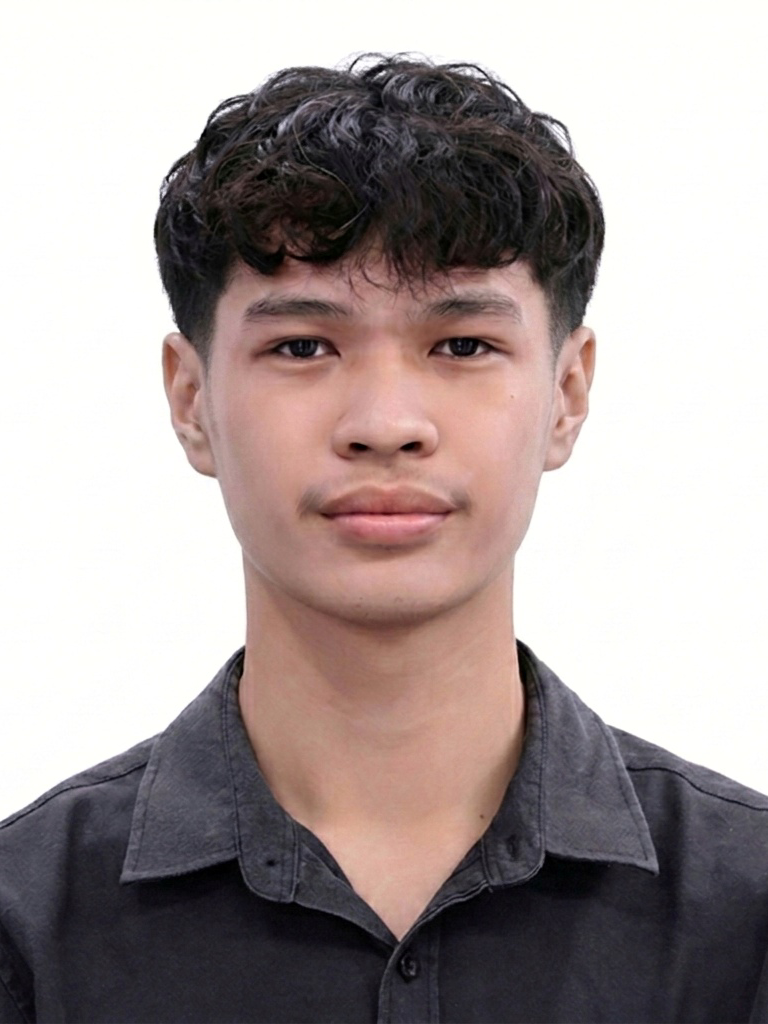
Awards are renowned for their titles, prestige, and medals. The feeling of returning home with applause and pride that one might believe to be the essence of winning. However, for Juliana Eunice Fuentes, that is not the case.
Unaware, since the award had been on hiatus for seven years, Fuentes first came upon the Ten Outstanding Students of the Philippines (TOSP) - Bicol award through a nomination from the Dean of the College of Humanities and Sciences of Ateneo de Naga University. Unknowingly, she did not yet fully commit to pursuing the award due to her unawareness and the rigorous process one had to undergo. Awards were not Fuentes’ cup of tea, citing that these types of recognition should not be applied for, but instead given for the contributions they have seen in you.
“And so it came to the point that I decided to push through because I want to have a platform for my advocacies.”
During the span of her college life, Fuentes had already been involved in several organizations that were rooted in community work and service, both outside and inside the university. These organizations gave her the platform to preach her advocacies and make concrete contributions to her community. But when the time came to graduate from the institution, Fuentes also had to step down the pedestal—losing the voice she had for her advocacies. However, upon looking deeper into the purpose entrusted to her, she did not see an award, she saw an opportunity—an avenue.
"This TOSP, or this Ten Outstanding Students of the Philippines, is not even about me. Doon ‘yon nagsimula. Hindi 'to tungkol sa akin.”
Just like a tree, it cannot stand tall on its own, it stands tall because of the roots holding it together—serving as its foundation. Fuentes looks back in love why she started this journey, why she dedicated a piece of her life to service, and why she accepted the nomination. Delving into the roots of her life, she did not see herself, she saw the stories of the community she grew up in.
“Kahit wala, meron.”
As a child, Fuentes was already exposed to community involvement through her grandfather who was a farmer. She cited that he believed in the saying, “Kahit wala, meron”, which ignited that fire in her heart for her community. Despite having little to nothing, the tree can still grow if its roots are strong enough to draw in that sense of spirit and collectivity. There, Fuentes’ roots began to grow and spread as she continued to branch out and hear the stories and experiences of others.
“So the feeling of belonging and being part of those communities is what really made me grounded.”
As she continued to branch out into other areas of the Bicol Region, the roots kept on grounding her towards her hometown—Vinzons, Camarines Norte. As a nominee of TOSP, Fuentes felt privileged and proud to not only represent Bicol, but also Camarines Norte, because a community cannot be a whole without the individual stories forming it. This has been the case for Fuentes’ drive to push for her advocacies, the painful realities she heard during her outreaches.
“Pero those are the things that are simple, and yet hindi naaabot 'yung mga tao na kailangan maabot. And 'yun 'yung isa sa mga sinusulong ko: na dapat ang healthcare, or ang public healthcare, is a basic human right. Hindi lang para sa mga taong may pera, hindi lang para sa mga taong nakapag-aral, pero para din doon sa mga taong walang oportunidad na mapunta sa mga ganitong lugar.”
During the interview process, Fuentes recalled a story that pushed her fight for public health. A story surrounding a family from Calaguas Island who travelled to the Provincial Hospital. It involved a pregnant woman almost in labor, wherein she cited that due to the pain the woman was experiencing, they let her drink barikolkol—a native liquor—to relieve the pain as a common practice. Although during the next morning, both the mother and the baby did not survive, leaving the hospital staff unequipped on how to explain the situation to the husband. Fuentes emphasized that this kind of situation could have been prevented if proper healthcare was accessible.
This was also the case during a typhoon, Fuentes was part of Tindog Atenista and was assigned to Calaguas Island. It took months before her team was able to deliver the supplies to the island due to its remote geographical location. Fuentes pointed out that even if the goods are provided, the means of delivering them have been unaccounted for. That the simple things are made inaccessible due to the lack of proper resources. These are the kinds of stories she wishes to share, stories that come from the deepest of roots, stories that flesh out what people from remote places truly experience, stories that if branched out could be an eye-opener for so many.
But while these stories reveal the “wala” surrounding these communities—the lack of resources, accessibility, and opportunities—they also reveal the “meron” that continues them to keep fighting. For Fuentes, that “meron “ is not something that can be measured by what a community possesses. It is found in the people who continue to show up, in the communities that continue to care for one another, and in the stories that refuse to disappear.
“I am turning that emotional moment into something that will give an impact to change the lives of those people.”
For Fuentes, branching out never meant leaving her roots behind. Instead, every organization, every leadership position, every community she reached became another way of returning to the people who shaped her.
Fuentes held multiple leadership positions throughout college, serving as president of the Association of Psychology Students of Ateneo (APSA), chairperson of the Council of Organizations in Ateneo - Naga (COA-N), president and board member of the Bicol Region Association of Psychology Students, and an ex-officio member of the 44th Student Congress. Outside these organizations, she also participated in volunteer organizations and community work while balancing academics and even playing futsal. It was, by her own admission, exhausting.
“Pero in managing all of those kasi mahalaga na very anchored or may foundation ka as a person.”
Her foundation lies in collective action. Leadership, for her, was never meant to be carried alone. She worked alongside fellow student leaders, organizations, and mentors who helped carry the responsibilities when they became too heavy. And when the weight becomes too much, recognizing one’s limitations becomes part of learning how to serve others.
Service cannot be sustained without people, and people cannot sustain themselves without care. The same collective spirit that allows a community to survive is the spirit that allowed Fuentes to survive.
This collective strength reshapes what it means to be “outstanding.” For Fuentes, outstanding does not begin with a medal, a title, or a place in a list; It begins with showing up.
“I am calling on all the youth and all the young individuals to be outstanding in your own ways.”
To be outstanding, according to Fuentes, is not to chase recognition for its own sake. It is to speak when there is something that needs to be said. It is to listen when there is someone who needs to be heard. It is to tell the stories of communities that may otherwise remain unseen. The award just becomes secondary.
It is the very reason why she initially hesitated to pursue the award. Recognition was never something she sought. And now, as she prepares to represent the Bicol Region at the national level, she does not intend to manufacture a version of herself worthy of the title.
“Actually, there’s no preparation. You don’t prepare.”
Instead, she continues to do what she has always done: speak to young people, volunteer, engage with communities, and listen to the stories that continue to shape her.
After taking the Psychometrician Board examinations, Fuentes plans to return to her hometown and continue volunteering. She hopes to work with the Department of Health and eventually pursue med school. Whatever path she takes, however, her direction remains the same.
“Kasi sabi ko nga, hindi naman porket naging TOSP ako, hindi naman porket TOSPian na ako, hindi naman porket naka-receive na ako ng ganitong award, e tapos na yung tabaho natin with these people and these communities. But rather, it is just starting.”
The branches may continue to grow. But wherever those branches lead, Fuentes knows where they must remain anchored.
Back home.
Back to the communities.
Back to the people.
Back to the roots.
Because “Kahit wala, meron.”
Even when resources are scarce, there remains something that people can give. This is the abundance that Fuentes has been carrying all along.
“At the end of the day, kahit feeling mo walang-wala ka nang maio-offer, there will always be something inside you and around you that you give to other people for them to be able to have something as well.”