
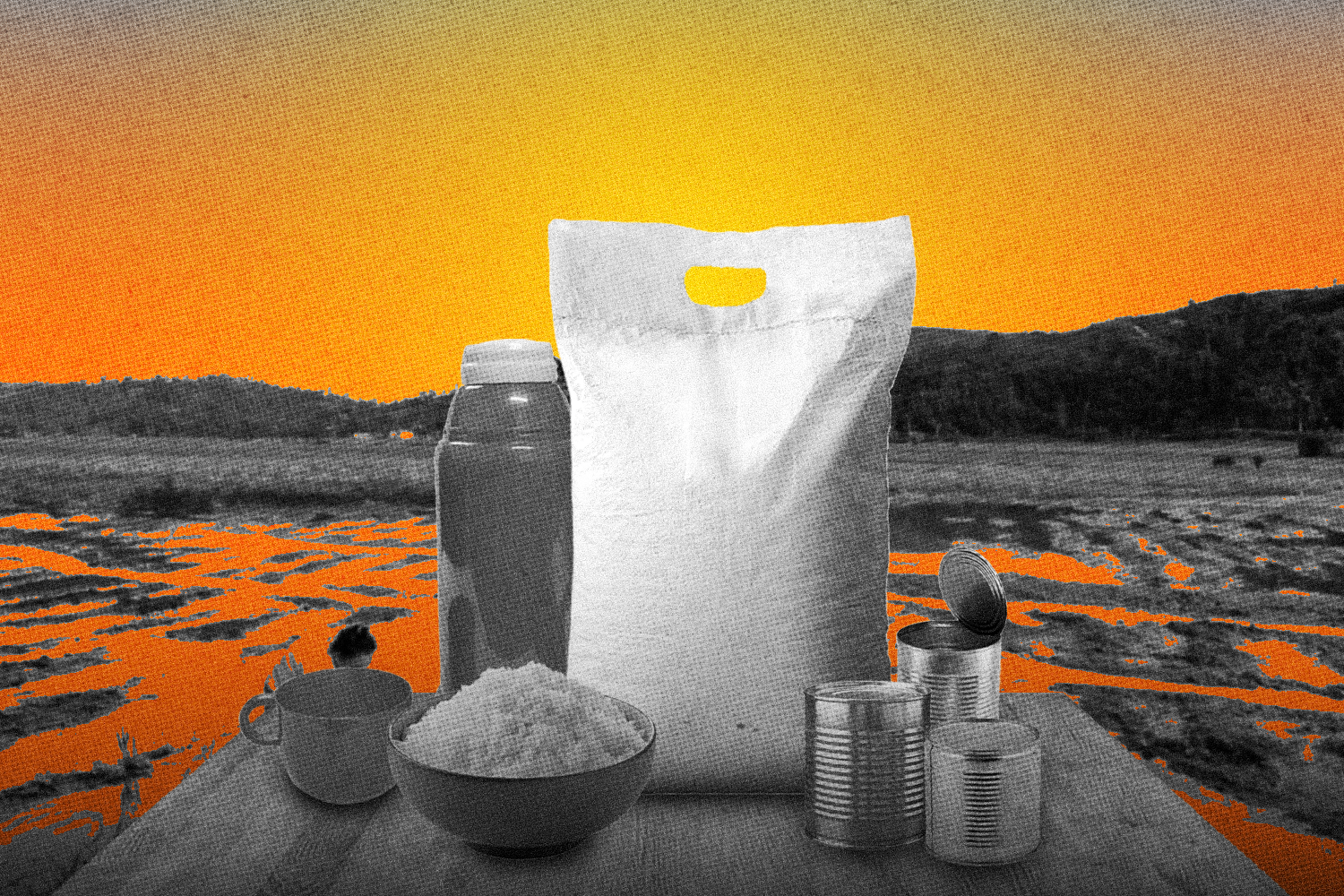
Gutom na ako.
A familiar Filipino sentiment that almost everyone can relate to.
For those whose pockets are full, hunger is easily satisfied. However, for those who cannot afford to put food on the table, it is a need often left unanswered.
How can you really feed your growling stomach when the only thing there is were cold leftovers?
Saying gutom na ako should never become a privilege, too.
During the month of October, the contributions of our farmers, agricultural workers, and rural peasantry are often placed in the media spotlight. But in the Philippine market, these contributions continue to clash with a lack of opportunities, perpetuating a system of scarcity and limited economic mobility.
This happens while those in power remain busy debating responsibility instead of demanding accountability.
Once a system fails to recognize who is at fault when its failures become visible, those responsible shift the blame onto the people.
Yet, political propaganda should always remain propaganda.
When Filipinos are praised for their resilience, our peasants have long embodied it. Two knees meet the ground, with one hand supporting the other as they struggle to stand on their own. No questions are asked, only the desperate need to survive.
This is the difference between an ordinary Filipino who is hungry and a Peasant that carries the whole dying economy.
Hence, in periods of Philippine disasters, most rural areas with numbers of them, their loss often became a life cycle of recovery; recovering through distributed green bags of relief goods consisting of NFA rice and sardines or a five-hundred-pesos of ayuda with printed faces more expensive than the distributed goods.
Nakakasawa ang ganitong sistemang paulit-ulit na naglulugmok sa ating mga magsasaka, mangingisda, at manggagawang-bukid.
When their losses are reduced to monetary aid, the distinction between short-term relief and long-term solutions becomes increasingly blurred. They are forced to settle for what is available rather than what they truly deserve in the long run, especially when a loss cannot simply be defined by a number. It is a home, a livelihood, a landscape, and a future left waiting.
When the system told us that we, Filipinos, are resilient, are we really? If so, why do the people at the very root of our survival still find it hard to make a living? Are our farmers and fishermen not resilient enough to receive the fair compensation they deserve?
Or perhaps they are being caged in systemic vulnerability while those responsible conceal their misplaced accountability.
Perhaps their lack of responsibility is being masked by our resilience, limiting us from demanding more while expecting us to settle for whatever they are willing to offer.
Low income is not personal failure but rather a systemic one.
As soon as farmers produce our goods, all the chairs are occupied with people sitting comfortably. However, when they demand fair wages from their produced goods, all the chairs suddenly become empty.
Meanwhile, fishermen struggle to sell in the day, known businesses are making sure they don’t sell more by polluting the very source of their income at night.
As soon as farmers produce our goods, every chair is occupied by people sitting comfortably. However, when these farmers demand fair compensation for what they produce, all those chairs suddenly become empty.
Meanwhile, as fishermen struggle to sell their catch during the day, established businesses continue to threaten their livelihoods by polluting the very waters that sustain their income.
As a result, our politics continue to sell us out through deals with foreign powers, expanding businesses instead of strengthening our own economy. How much longer can we endure when the very state whose economy we are trying to revive continues to leave us starving?
How can an economy fight when its biggest rival is importation?
In a system shaped by these conditions, the idea that Filipino workers can succeed simply by working hard enough becomes a deliberate falsehood perpetuated by capitalism. Agriculture cannot thrive when the garden is infested with parasitic worms crawling through the market while we continue to fertilize foreign products. Under these conditions, importation becomes another means of stealing opportunities from farmers, fishermen, and farmworkers.
When a system continues to operate this way, we will eventually rot within it. Stealing opportunities from our peasants is equivalent to destroying our own lifeline.
Dahil kapag laging ninanakawan ang ating mga pesante, paunti-unting magiging isang kahig at isang tuka ang lahat.
Sooner or later, we will find ourselves a million times hungrier than before, especially when the very food we place on our tables comes from the hands of those we continue to neglect.
Because for their seeds to grow and feed the nation, we must first feed their needs.
The habit of being resilient is really a virtue, but the necessity of it should never be a requirement for their survival. It is just a temporary warmth aid; a cultural norm that is tolerated as something that is permanent.
Resiliency is just a political narrative when they don’t know what responsibility is; a scapegoat for their inequality and injustice.
A warm rice, hoping to fully wrap us out when we are cold.
But being here in the cold for so long made us forget that we are not in need of that same rice anymore, rather we now seek for the warmth of an equal profit and a decolonized economy.
Hoping that these things will finally not be the same table anymore.
These conditions were not created by the system alone, but by the people who continue to benefit from standing above it.
And if someone asks us again why our rice is cold, tell them they left us behind with nothing but a microwave. Because eventually, the warmth will fade, the rice will turn cold again, and our tables will remain empty.
When the tables become food-empty, it is a misplaced responsibility.
Dahil madaling sabihin na kumakalam ang sikmura natin, o ika nga nila, gutom tayo. Pero kung pag ta-trabaho at pagiging matatag ang laging sagot bilang solusyon dito, bakit nakakulong pa rin ang uring manggagawa sa sakunang ito?
