
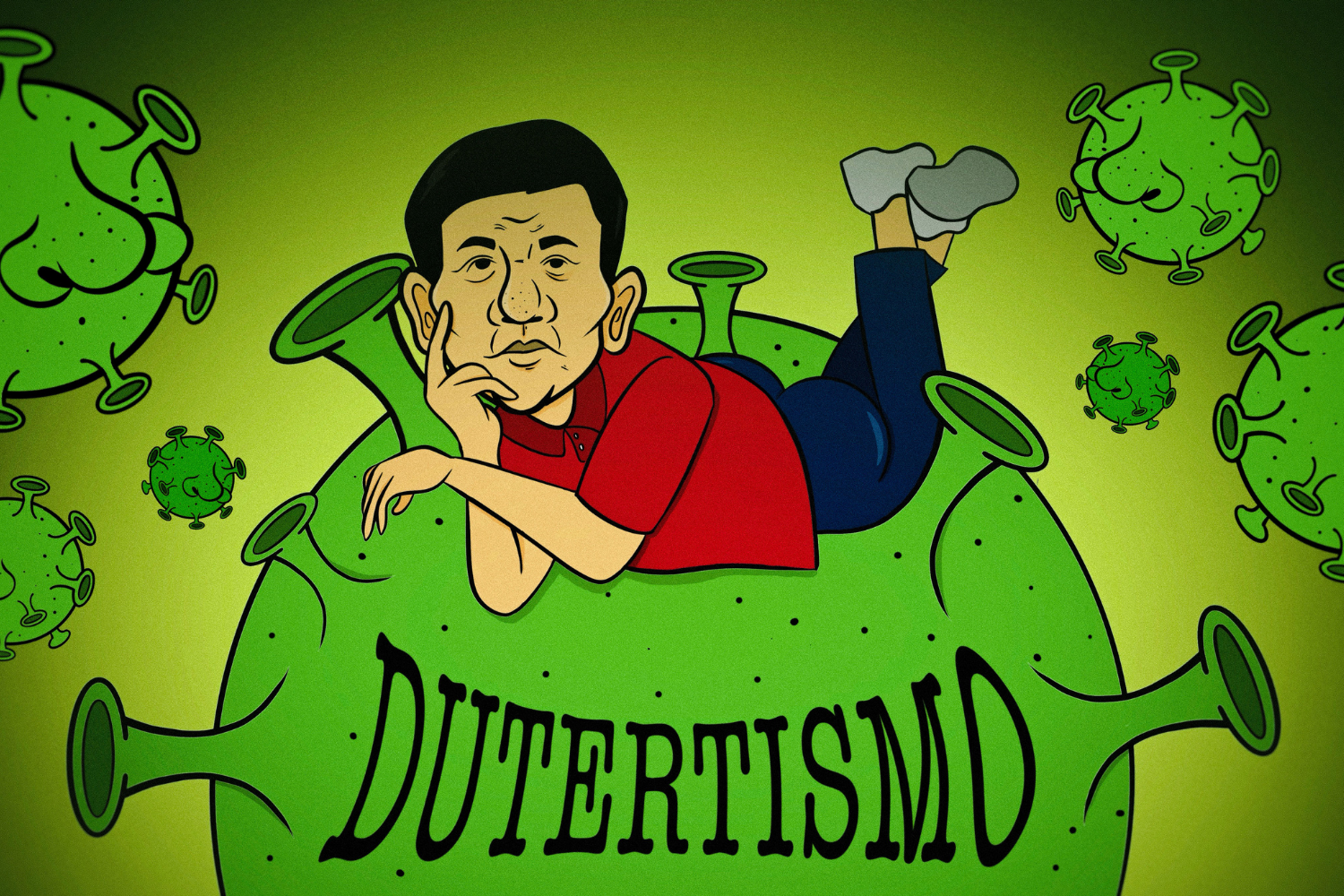
THE STEEL bars of Scheveningen in The Hague are cold, a far cry from the humid, sun-drenched halls of Malacañang or the rugged comfort of Davao. Today marks exactly one year since Rodrigo Roa Duterte, the man who once promised to fatten the fish of Manila Bay with the corpses of criminals, was led onto a jet to face the International Criminal Court (ICC).
For many, that March morning in 2025 was a "monumental step" for justice—a rare moment where the wheels of international law actually ground a former strongman into the dirt. But as the sun rises over Manila today, the atmosphere isn't one of collective healing. Instead, it is one of a deepening, dangerous haunting. Duterte is in a cell, but Dutertismo—that volatile cocktail of penal populism, cultural machismo, and organized resentment—is not just alive but it is thriving.
The Spread of Impunity: A Pathological Legacy
“The arrest and detention of Mr. Duterte has not stopped impunity in the Philippines.”
With those words, human rights lawyer Joel Butuyan, representing victims before the International Criminal Court, framed the difficult reality surrounding the prosecution. Butuyan’s statement carries a warning that extends far beyond the fate of one political figure. While Duterte awaits the next stages of a grueling international legal process, the culture of impunity he championed continues to reverberate across the archipelago.
Butuyan described the phenomenon in stark, medical terms. The former president, he argued, “spread a virus of impunity” that has since metastasized within the country’s political culture. The metaphor is unsettling because it suggests that the damage is no longer contained within a single person, but has become part of the national DNA.
This captures the central dilemma of transitional justice: prosecuting a leader may address individual accountability, but it does not automatically erase the norms or political incentives that sustained that leader’s policies. In the Philippines, the "kill" orders were not merely administrative directives; they were a cultural shift that empowered the police and vigilantes to act as judge, jury, and executioner without fear of consequence.
The Rise of the "Clones"
According to lawyers representing victims before the ICC, the violence did not end with the thousands of deaths in the "war on drugs." Harassment, intimidation, and threats against survivors and witnesses have continued long after the official operations ceased. These acts are often carried out not by the state directly, but by what Butuyan bluntly calls “clones” of Duterte.
These are local executives, police commanders, and even neighborhood leaders who absorbed and reproduced the rhetoric of violent governance. They are the "mini-Dutertes" who found that fear is the most efficient way to maintain power. This is the inevitable result of a state that prioritizes "order" over human rights—it creates a franchise of violence that outlives its founder.
The Social Legacy of Violent Politics
The persistence of Dutertismo points to how political violence can normalize itself within public discourse. Throughout his presidency, Duterte’s harsh language was not a bug; it was the main feature. By framing suspected criminals as sub-human "zombies" and critics as "terrorists," he successfully blurred the line between state policy and popular sentiment.
For a significant portion of the population, his message was clear: violence is a legitimate tool for social engineering. This dynamic helps explain why his detention has not erased his political influence. Even in confinement abroad, his rhetoric continues to resonate with those who feel abandoned by the traditional "liberal" elite.
Duterte gave voice to the resentment of the masses. The problem was that the voice he offered was not one directed toward democratic reform but toward a scream for blood. Even with his departure, many who embraced that rhetoric are not necessarily seeking democracy; they are searching for the next figure who will allow them to express the same rage.
Justice and Its Limits: The ICC vs. The System
The ICC proceedings represent an unprecedented moment—never before has a former Philippine president been subjected to international prosecution for alleged crimes against humanity. For the families of those killed in the slums of Tondo and the alleys of Davao, the case is a beacon of hope. It signals that their loved ones were not "trash" to be discarded, but human beings whose lives had value.
Yet, a critical analysis reveals the limits of this international intervention. The ICC can try a man for "Crimes Against Humanity," but it cannot try the structural inequality that made him possible. While the world watches The Hague, the Philippine justice system remains largely unreformed. The police force that carried out the killings is still in place, and the legal hurdles for victims to find justice in domestic courts remain insurmountable for the poor.
The current Marcos administration, while allowing the ICC to proceed as a matter of political convenience to neutralize a rival family, has shown little interest in dismantling the actual machinery of the drug war. By keeping the legal battle focused solely on the person of Duterte, the state avoids a deeper reckoning with its own complicity in the bloodshed.
A Country Still Confronting Its Past
One year after the arrest, the Philippines is a nation of "occupied cells and empty promises." The former president waits in Scheveningen, but his ghost haunts every political rally and every police precinct.
The challenge is no longer just about seeing a former president behind bars. It is about an ideological struggle against a mindset that views human rights as an obstacle to progress. Until the root causes of the drug trade—poverty, lack of healthcare, and systemic corruption—are addressed, the "ghost" of Dutertismo will find new bodies to inhabit.
The cell in The Hague may be occupied. But the culture of impunity remains a challenge the Philippines has yet to truly confront. As long as the system rewards the strongman and punishes the vulnerable, the "virus" will continue to spread, long after the man in the cell is gone.
