
“Siguro ganun talaga ang magmahal. Hahayaan mo silang mabuo kahit na mas malaki ang mawawala sa 'yo.”
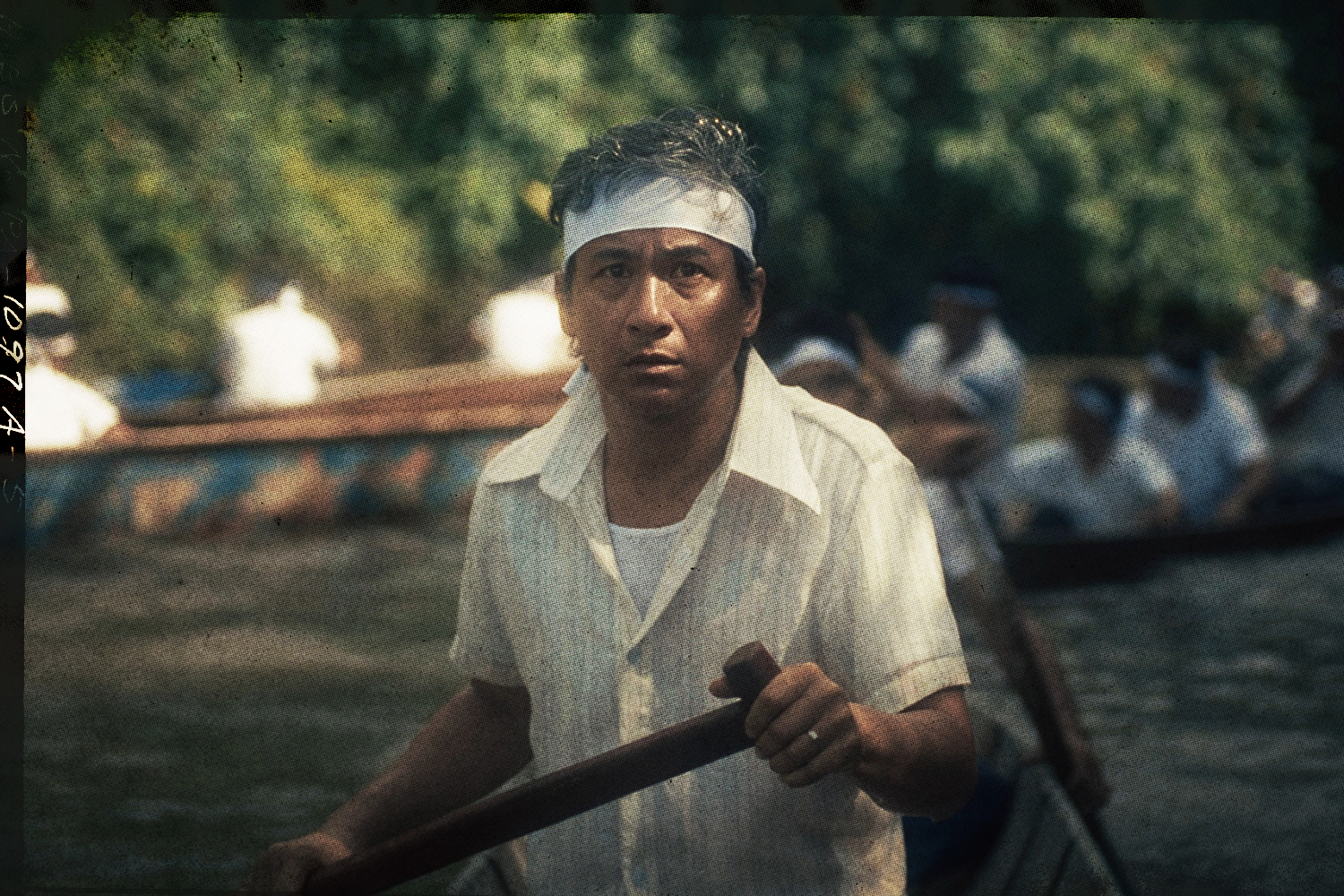
Padamlágan (Night Light) is a historical drama about the Colgante Bridge tragedy that claimed over 200 lives during the Peñafrancia Fiesta on 16 September 1972, which was overshadowed by the declaration of Martial Law in the country five days later. Directed by Jenn Romano and starring Ely Buendia, it follows Doring on a frantic search for his son, Ivan, who went missing during the bridge's collapse after attending the festivities with his cousin, Frank. What unfolds is not only a desperate father's journey through a city, grieving and in shock, but also a reflection on memory, loss, and the political climate leading up to the Marcos dictatorship.
Initially screened at the 21st Cinemalaya Film Festival, it won the Best Production Design award, shown through set pieces, costumes, and practical and visual effects that capture the atmosphere of Naga in 1972. Padamlágan arrived in Naga on 6 February and was met by Nagueños of all ages eager to see their hometown represented on the big screen.
The film presents itself as a hybrid. Doring's search for Ivan serves as the film's driving force, yet it is intercut with a slideshow of archival photos from the 1970s Naga and the aftermath of the tragedy. These images are accompanied by interviews with witnesses and a family member of one of the casualties, blurring the line between fiction and documentary. Through this interplay, Padamlágan doesn't read like a historical reenactment. Instead, it places itself as an assemblage of testimonies, images, and reimagined narratives. The end result is a film that not only tells the story of Doring but also recounts the collective trauma of many Nagueños and how it marked their community.
One of the film's strongest aspects is its award-winning production design. The sets, costumes, and details meticulously recreate 1970s Naga, from the crowd of the Peñafrancia fiesta to Ivan's bedroom, where the Beatles and many political posters give us a glimpse of what Ivan truly is. Every element feels thoughtfully placed, grounding the film in a time and place and enhancing its historical authenticity. It really makes us feel as if it were shot in the 70s.
While the shot compositions are often striking, they occasionally rely too heavily on shots framed from behind windows, mirrors, or from distant vantage points. This perspective creates the sense that we are simply observing what happens from the outside, rather than being fully drawn into the drama. This was particularly the case during the scene outside Naga City Hall, where Doring argues with Zaldy after yelling at a city hall employee. Because we're simply peering out of a window, their faces and gestures are difficult to read, preventing us from fully grasping how intense the scene really is. Because of this, the scene, which was supposed to be very emotional and powerful, felt somewhat detached.
The film's editing is strong, given the seamless change between the narrative and interviews, as well as the visual effects showing the collapsed Colgante. Though the title design is noticeably plain, simple white text on a black background. While it gets the job done, it feels like a missed opportunity to contribute to the storytelling of the film. It could have set the tone or reflected the film's historical context, adding another layer of narration.
Another shortcoming lies in Buendia's performance as Doring. While his casting carries a certain significance, given his roots in Naga City, his portrayal often leaves much to be desired, sometimes lacking the emotional range demanded by the role. In several key moments, such as when Colgante collapsed or during his search for Ivan, these moments of distress and urgency felt restrained to a point where they felt flat, making it hard for us to grasp how much Doring is supposed to be grieving and panicking, weakening the overall emotional intensity of Doring's search for his son.
Another weakness lies in the film's treatment of Ivan and the broader historical context. Ivan's character remains underdeveloped, shown only on-screen for a brief moment, and with so little dialogue, he largely exists through the recollections of Pay Noel and Joanne as well as his personal effects, limiting our emotional connection to him. Similarly, the looming threat of the declaration of Martial Law in the Philippines is only briefly shown, through a man (presumably a journalist) being dragged out of a building by PC officers.
Nevertheless, Padamlágan, the feature directorial debut of Jenn Romano, remains as a moving reconstruction of the Colgante Bridge tragedy, offering us a vivid look at how a community grapples with grief and heartbreak. Despite the challenges in recreating a tragedy that was not heavily documented, mixing archival material with a fictional narrative, coordinating large-scale crowd scenes, and working with a limited budget and timeframe, Romano and her team managed to overcome these obstacles and deliver a film that resonates long after the credits roll.
Looking back on the tragedy, Padamlágan goes beyond telling a decades-old story to remaining strikingly relevant today. Like a lantern continuously burning in the dark, the film shines a light on both the Colgante tragedy and the shadows cast by substandard public infrastructure projects and government incompetence and negligence, which continue to endanger communities to this day. By revisiting the Colgante tragedy, it critiques how systemic, repeated failures left unaddressed put communities in danger. The film is a pointed reminder that such lapses are not mere flickers of light that briefly fade into darkness. They are realities that continue to haunt communities, what in Bikol we call nagdadamlag, and they demand not remembrance alone but real accountability and justice.
