
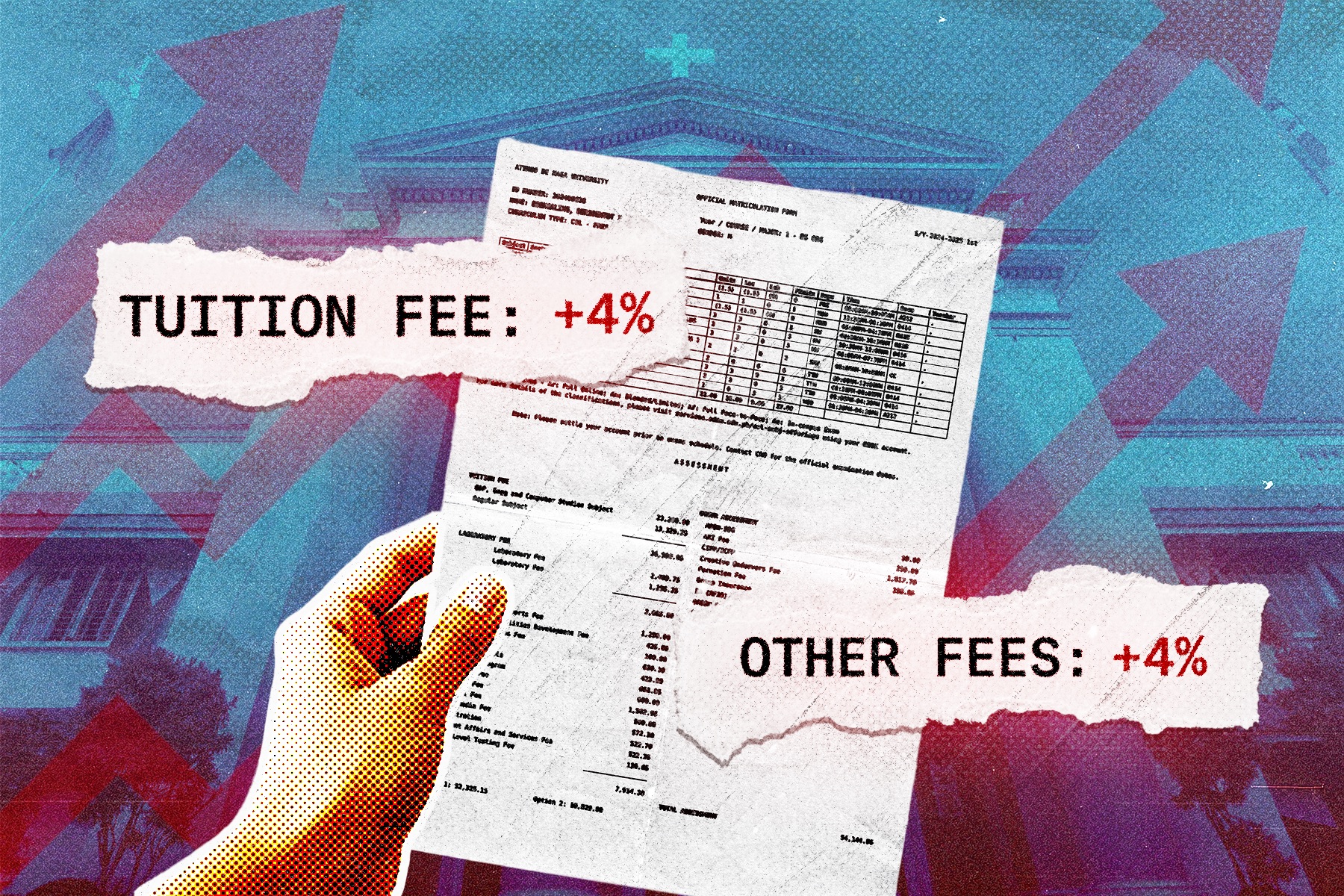
FOR THE fourth consecutive year since the pandemic, the Ateneo administration has proposed a 4% increase in tuition and other fees for the coming academic year. ThePILLARS Publication strongly opposes the university administration's proposed change.
Ateneo often invokes its identity as an institution “for others,” but the yearly increase in tuition and other fees takes a different path. For whom, exactly, is education intended? While the university needs to adapt to the current inflation, the repeated decision to pass this burden to students unveils a system that is increasingly comfortable with exclusion. In a region where families are still navigating economic instability, tuition hikes do not simply readjust budgets; it draws a line between who gets to pay and stay, and who is forced to leave.
TOFI is repeatedly framed as necessary adjustments, yet what often goes unstated is how frequent these increases are imposed—every year, without a pause. A four percent hike may seem normal on paper, but when implemented year after year, it compounds into sustained pressure that students are expected to absorb as normal. For families already stretched thin, the question is no longer how they can afford Ateneo education, but how long they can endure it.
We recognize and empathize with the university’s faculty and employees, many of whom also bear the weight of rising costs of living. Teachers and non-teaching staff deserve fair compensation, job security, and working conditions that reflect their indispensable role in the Ateneo community. Any effort to improve their welfare is both just and necessary. We also acknowledge that a significant portion of the proposed increase is projected to go toward salaries and benefits.
However, the burden of ensuring dignified compensation for employees should not be disproportionately transferred to students and their families. Pitting student affordability against employee welfare is a false choice that obscures deeper structural questions about budget priorities, financial transparency, and institutional accountability. Supporting teachers and staff must not come at the expense of making education increasingly inaccessible.
Standing with educators and employees does not require students to quietly accept annual tuition hikes as inevitable. An institution that truly claims to be “for others” must exhaust all alternatives before resorting to measures that risk excluding those it claims to serve. Until such alternatives are meaningfully explored and transparently presented, we remain resolute in our opposition to the proposed increase in tuition and other fees.
As the voice of the students, we urge the administration to reconsider the proposed fees increase and recenter the welfare and inclusivity of the student body in these decisions. Accessible and quality education must remain a priority. Ateneo de Naga University’s transformation to a better university is a shared goal, but this must not come at the cost of the students' welfare.
Tama na ang TOFI.
